
To verify a Chinese supplier, check six things before you pay anything: that the company exists and its registration details are consistent, that the website and contact details match, whether it is a factory or a trading company, that its product range fits your order, that its documents are consistent and current, and that its payment details match the company name on your contract. A sample order and a clear written record add another layer of confidence.
None of these checks needs special tools. They need time, a methodical approach and a willingness to pause when something does not add up. This checklist walks through each step, explains what to look for and lists the warning signs.
Why verify before you pay
A professional website, a fluent email and a convincing catalogue are easy to produce. They do not prove that a supplier is who it says it is, or that it can make your product to your specification. Problems found before an order starts cost very little to fix. The same problems found after payment can be expensive and slow to resolve across borders.
Verification does not guarantee a good outcome. It reduces the chance of avoidable surprises and gives you a documented basis for your decision.
The checklist at a glance
| Check | What to look for | Warning sign |
|---|---|---|
| Website and online presence | Active site, consistent company name, real contact details | Newly built site, stock photos only, no address |
| Registration details | Company name, address and registration number that agree across sources | Names or addresses that differ between documents |
| Factory or trading company | Clear explanation of what the company makes itself | Vague answers about who actually produces the goods |
| Product range and capacity | Products that match the company’s description and your order | A very wide range with no sign of specialisation |
| Contacts and communication | Named contacts who answer specific questions | Evasive answers, pressure to decide quickly |
| Documents and certificates | Current, consistent, relevant to your product | Expired, unreadable or mismatched documents |
| Samples | Samples that match the agreed specification | Samples that differ from the catalogue or from earlier samples |
| Payment details | Account name matches the contracting company | Requests to pay a personal account or a different company |
Step by step
1. Check the website and online presence
Look at the website as a buyer would, then look beyond it.
- Does the company name on the site match the name in the quote and the contract?
- Is there a physical address and a way to reach the company other than a contact form?
- Does the content look maintained, with products, news or updates that make sense?
- Are the product photos consistent with each other, or do they look like they come from different sources?
A website alone proves little. Use it as a starting point and compare what it says with other sources.
2. Check the company registration details
Chinese companies have registration records, and some basic information is published through official channels. Ask the supplier for a copy of its business licence, and compare the details with what you find in public records. The official National Enterprise Credit Information Publicity System is one place to look, though what it shows and how it works can change, and it is in Chinese, so you may want help reading it.
Compare:
- the company name, exactly as written;
- the registered address;
- the registration number and legal representative;
- the registration date and the stated business scope.
Two cautions. First, the business scope shows what a company is permitted to do, not what it actually does. Second, registered capital is not proof of financial strength or production capacity. Treat these as clues, not conclusions.
3. Work out whether it is a factory or a trading company
Neither is automatically better. A factory may offer more control over production, while a trading company may offer a wider range and flexibility. What matters is that you know which one you are dealing with, and that the supplier is honest about it.
Ask direct questions:
- Which products do you make yourselves, and which do you source from others?
- Where is production carried out, and who owns the equipment?
- If part of the work is subcontracted, which part, and to whom?
Business scope wording, the address, the product range and the way questions are answered can all be clues. None is proof on its own. If the answers are vague or change from one email to the next, note it.
4. Check that the product range and capacity make sense
A supplier that says it makes everything from textiles to electronics deserves a closer look. Check whether the product range is coherent, whether it matches the company’s description and your order, and whether stated capacity and lead times are realistic for your quantity. Ask for details that someone who actually makes the product would know easily, such as materials, process steps and typical tolerances.
5. Check the contacts and the quality of communication
How a supplier communicates before an order is a useful signal.
- Are you dealing with named people who can answer specific technical questions?
- Do the answers stay consistent over time?
- Is the supplier willing to put key points in writing?
- Is there pressure to decide quickly or to pay before details are agreed?
Keep the correspondence. A clear written record helps if there is a disagreement later.
6. Check the documents and certificates
Ask for documents that are relevant to your product and your market, for example business licence, test reports and, where applicable, declarations of conformity. For the European market, whether a product needs CE marking or other requirements depends on the product category and its intended use, so confirm the requirements for your product with a qualified compliance adviser.
When documents arrive, check that they are:
- current, not expired;
- legible and complete;
- consistent with the product you are buying, including model names and numbers;
- issued to the company you are dealing with, not to a different one.
Documents can be outdated, copied or incorrect. Inconsistencies are a reason to ask questions, not to assume the worst.
7. Use samples as part of verification
A sample tells you about quality, but it also tells you about reliability. Compare it with the agreed specification and with any earlier samples. If a second sample differs from the first, ask why and record the answer. Keep a log of what was requested, what arrived and what feedback you gave.
8. Check the payment details
Payment details are one of the most important things to check. The account name should match the company name on the contract and the invoice. Be cautious if you are asked to pay a personal account, a different company, or to change the payment details shortly before payment. If anything changes, confirm it through a channel you already trust, not only through the email that announced the change.
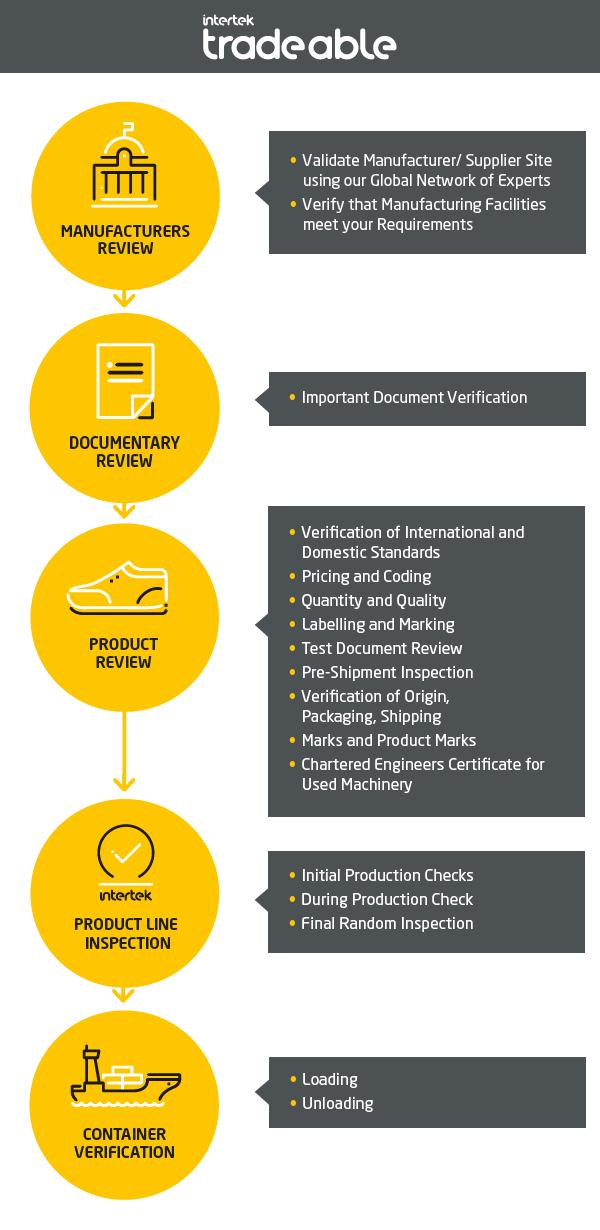
9. Consider a video call or an independent audit
For orders of higher value, a video call that shows the production area can add confidence, though it is not proof on its own. For larger or more complex projects, you can also consider an independent factory audit by a qualified third party. We do not provide factory audits, and the right level of checking depends on the value and risk of your order.
10. Record the result of each check
Write down what you checked, what you found and the source. Label each item verified, partially verified or not verified. If you could not confirm something, say so, and do not fill the gap with assumptions. This record turns a vague feeling about a supplier into something you can review and share with colleagues.
When to pause
Stop and ask more questions, rather than continuing, if you see several of these together:
- the company name, address or registration details differ between sources;
- the supplier cannot explain clearly who makes the goods;
- documents are expired, inconsistent or issued to a different company;
- the supplier avoids written answers or pushes you to pay quickly;
- payment details do not match the contracting company;
- samples differ from the specification or from each other without explanation.
One warning sign is not a verdict. A pattern of them is a good reason to slow down.
How we can help
If you would rather not do this research yourself, we can carry out these checks as part of our sourcing support. For each shortlisted supplier we provide a verification summary with sources and clear status labels, and we say so when something cannot be confirmed. We do not make the final decision for you, we do not sign contracts or make payments on your behalf, and we cannot guarantee any supplier’s price, quality or delivery.
Frequently asked questions
Can I verify a Chinese supplier without speaking Chinese?
You can do part of it: compare the website, documents and communication for consistency. Registration records are in Chinese, so help from someone who reads Chinese is useful for that step.
Is a business licence enough to trust a supplier?
No. A licence shows that a company is registered. It does not show that the company can make your product, that it is a factory, or that it will deliver on time.
Is a trading company a bad choice?
Not necessarily. What matters is that the supplier is clear about its role and that you understand who is making the goods.
How long does verification take?
It depends on how much information is available and how quickly the supplier responds. We cannot give a fixed timeframe, but starting verification before you commit to an order is almost always better than starting after.
Do you buy the goods on my behalf?
No. We provide sourcing support. You place the order and pay the supplier directly.
Want a second pair of eyes on a supplier? Contact us with a short brief and we will tell you whether and how we can help.